

Table of contents

Get treated by vein treatment industry leaders
What Is Sclerotherapy?

Medically verified
Last updated on 1/29/2026

By Dr. Michael Nguyen
Vein Doctor at Vein Treatment Clinic
Harvard Medical School
Board Certified by the American Board of Venous and Lymphatic Medicine
Sclerotherapy is a common, non-surgical treatment used to treat spider veins and some small varicose veins by closing them from the inside.
Many patients are unfamiliar with how sclerotherapy works and often wonder whether injections are safe, effective, or painful.

This page explains what sclerotherapy is, how it works, which veins it treats best, and what patients can expect before and after treatment.
If you’re unsure whether sclerotherapy is appropriate for your veins, a vein evaluation can help determine the best treatment plan.
What exactly is sclerotherapy?
To define sclerotherapy in plain terms, it is a treatment in which a medication is injected directly into a vein using a very fine needle.
The medication irritates the vein lining, causing the vein to close and eventually be absorbed by the body.
What types of veins does sclerotherapy treat?
Sclerotherapy for spider veins is the most common use. As an injection treatment for spider veins and some small varicose veins close to the skin surface, it targets vessels that are too small for catheter-based ablation.
Larger varicose veins usually require treatment of underlying reflux first before sclerotherapy is used as a finishing step.
How does sclerotherapy work?
Once injected, the sclerosing solution causes the vein walls to stick together, stopping blood flow through that vein.
Blood is naturally redirected to healthier veins, and the treated vein gradually fades over weeks to months.
Symptom Checker
Is sclerotherapy the same as vein surgery?
No. Sclerotherapy is not surgery and does not involve incisions or general anesthesia.
It is typically performed in an office setting and allows patients to resume normal activities quickly.
Does sclerotherapy hurt?
Most patients describe sclerotherapy as causing mild discomfort, often described as a small pinch or brief stinging.
Discomfort is usually short-lived and well tolerated.
How many sclerotherapy sessions are needed?
The number of sessions depends on how many veins are present and how the veins respond to treatment.
Many patients require multiple sessions for optimal cosmetic and symptom improvement.
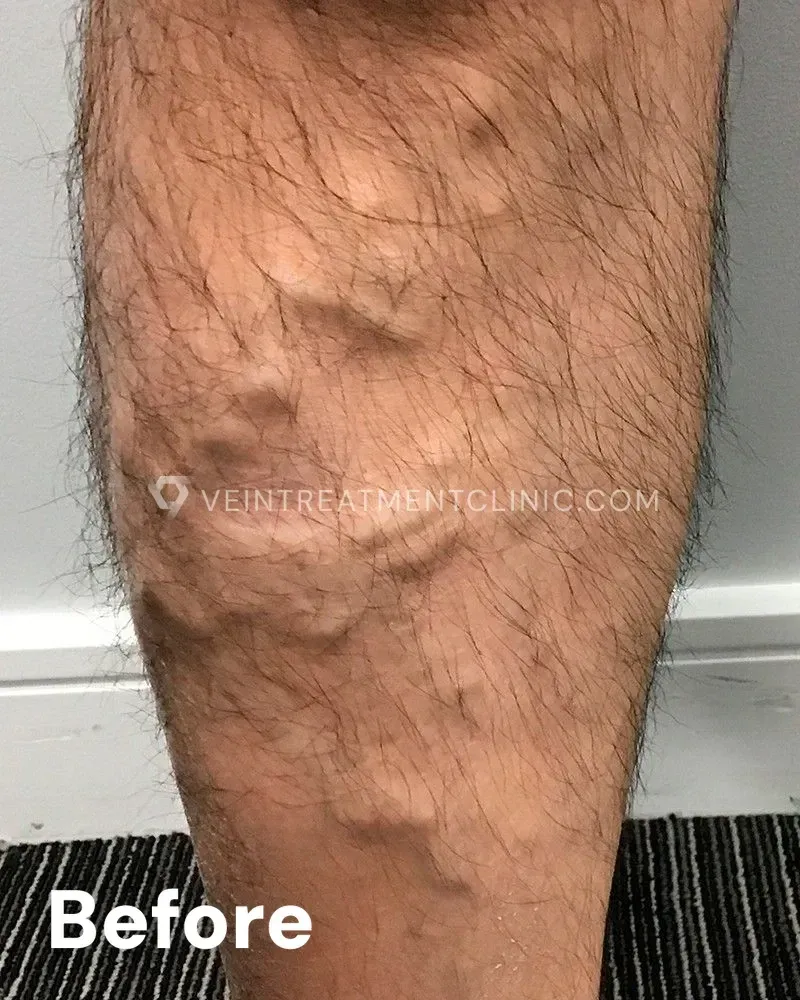
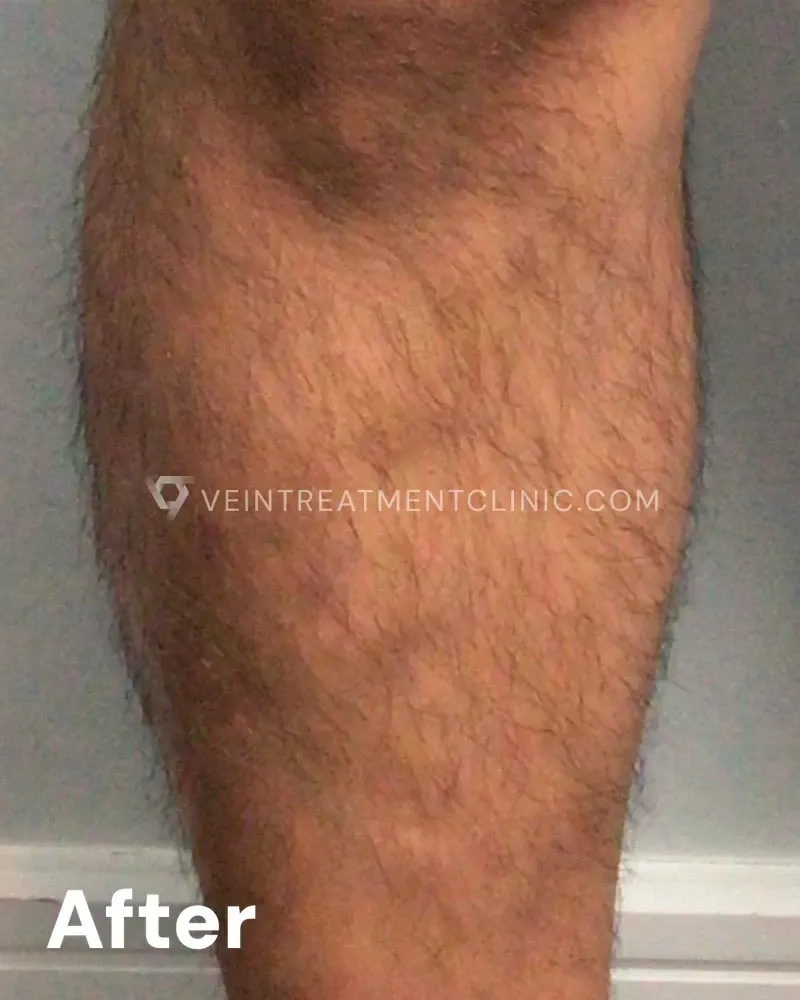
Male, treated for varicose veins on the calves with VeinVanish™, a customized treatment plan tailored to his condition. The after photo shows the treated areas appearing smoother with the varicose veins visibly reduced.
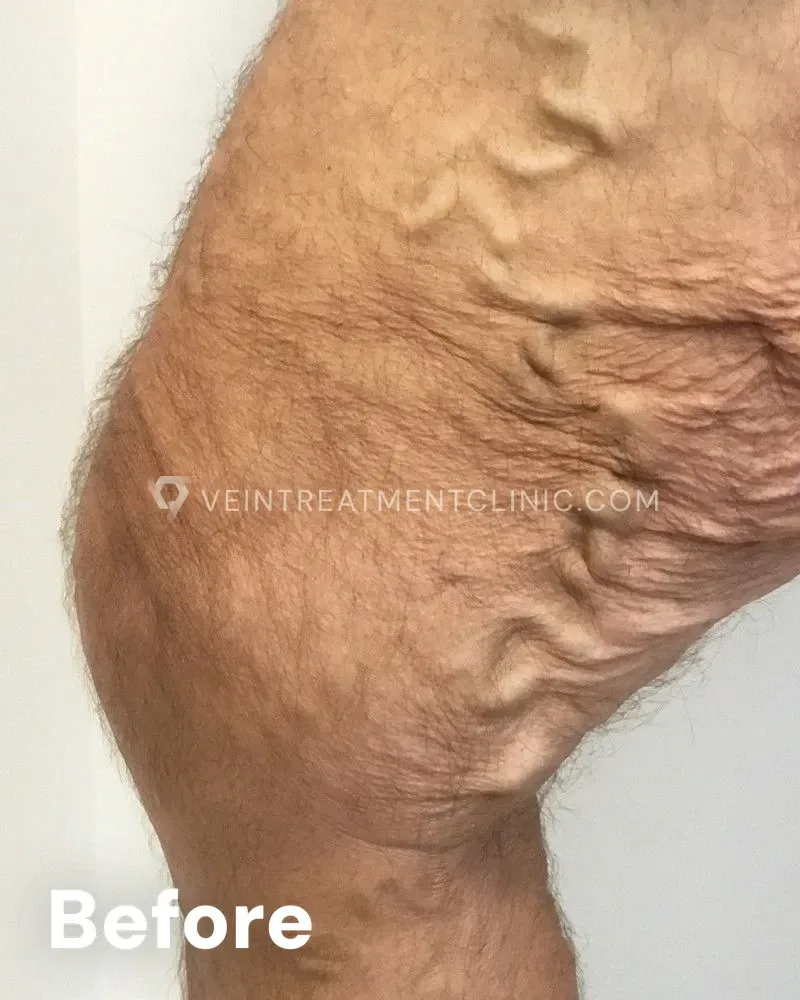
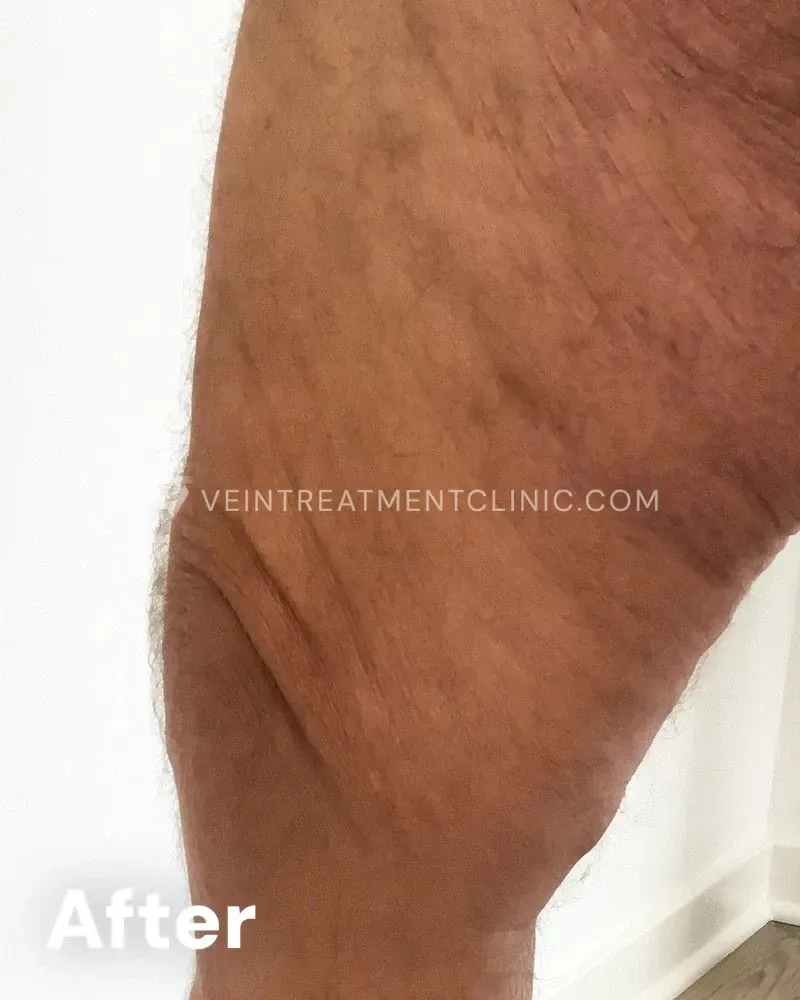
Male, treated for varicose veins on the thighs and knees with VeinVanish™, a customized treatment plan tailored to his condition. The after photo shows the thighs and knees with a smoother-looking appearance.
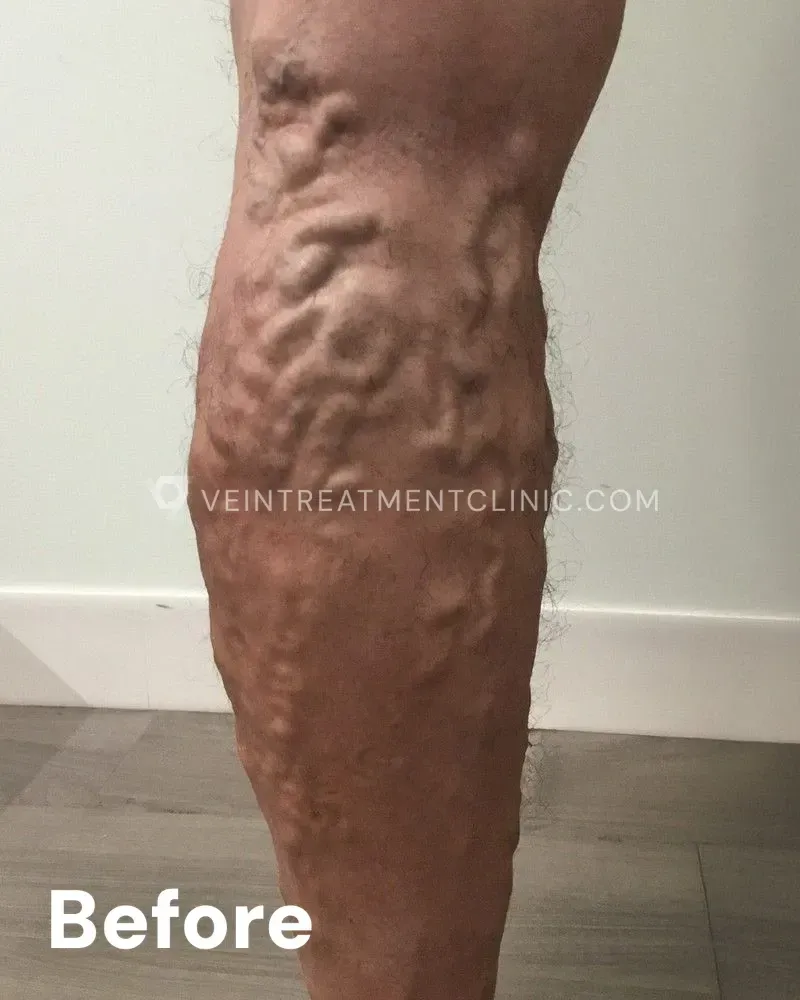
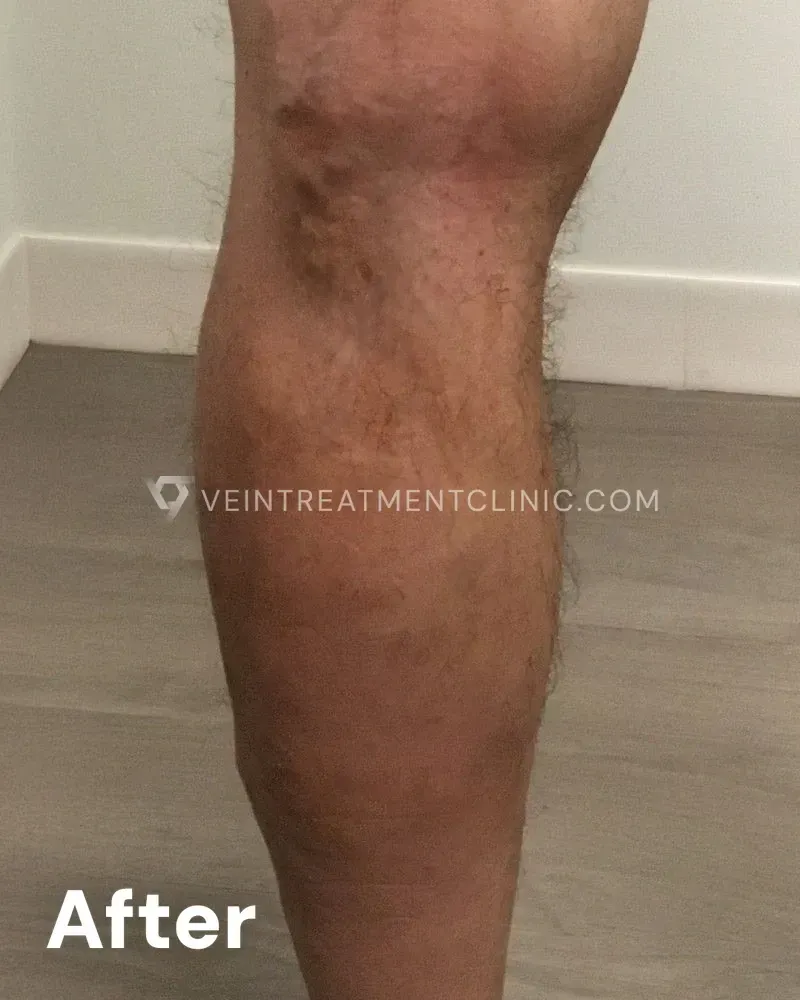
Male, treated for varicose veins on the calves and knees with VeinVanish™, a customized treatment plan tailored to his condition. The after photo shows the affected areas appearing smoother-looking with the varicose veins visibly reduced.
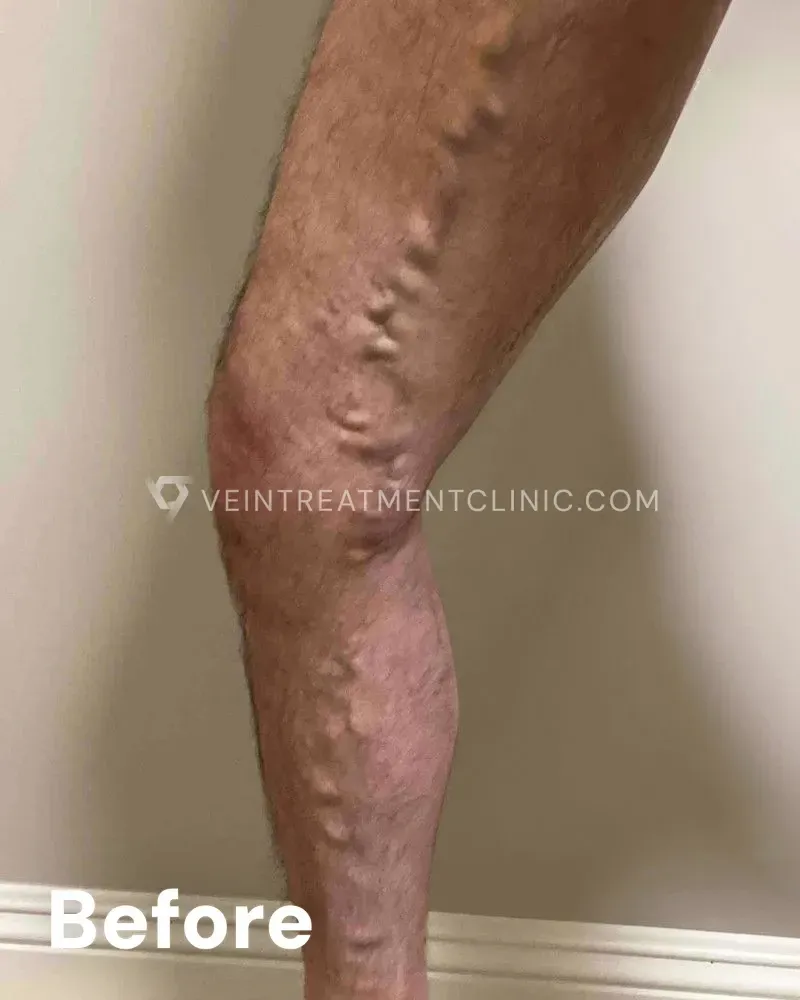
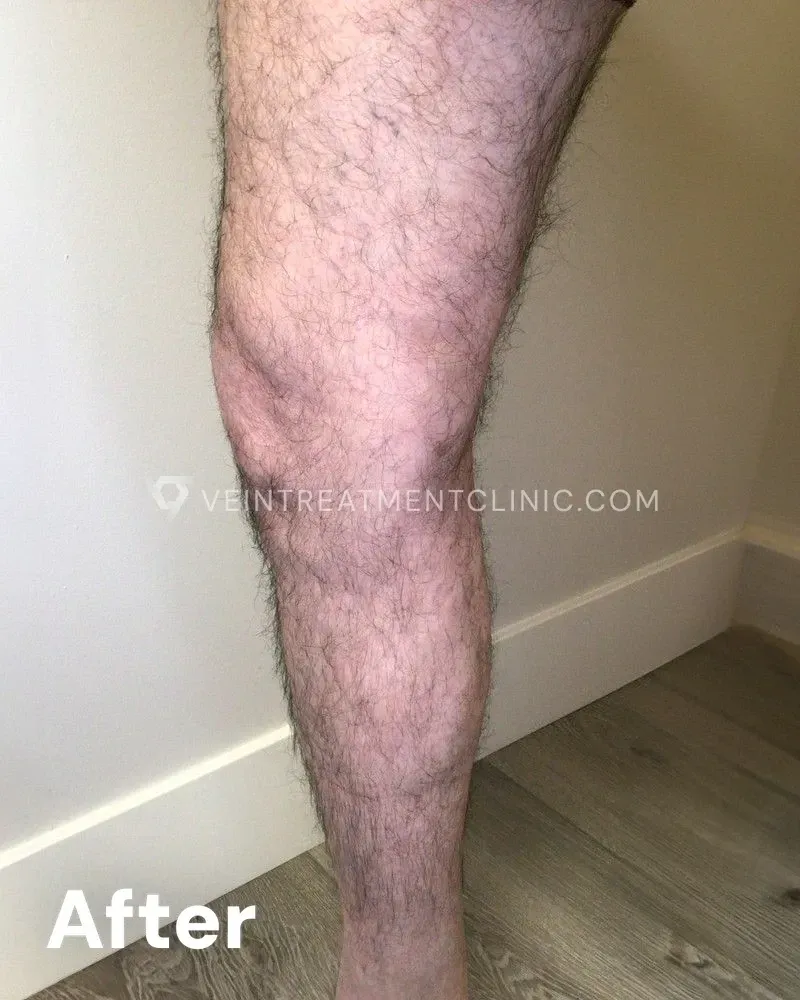
Male, treated for varicose veins on the thighs, calves, and knees with VeinVanish™, a customized treatment plan tailored to his condition. The after photo shows smoother-looking legs with the varicose veins visibly reduced across the treated areas.
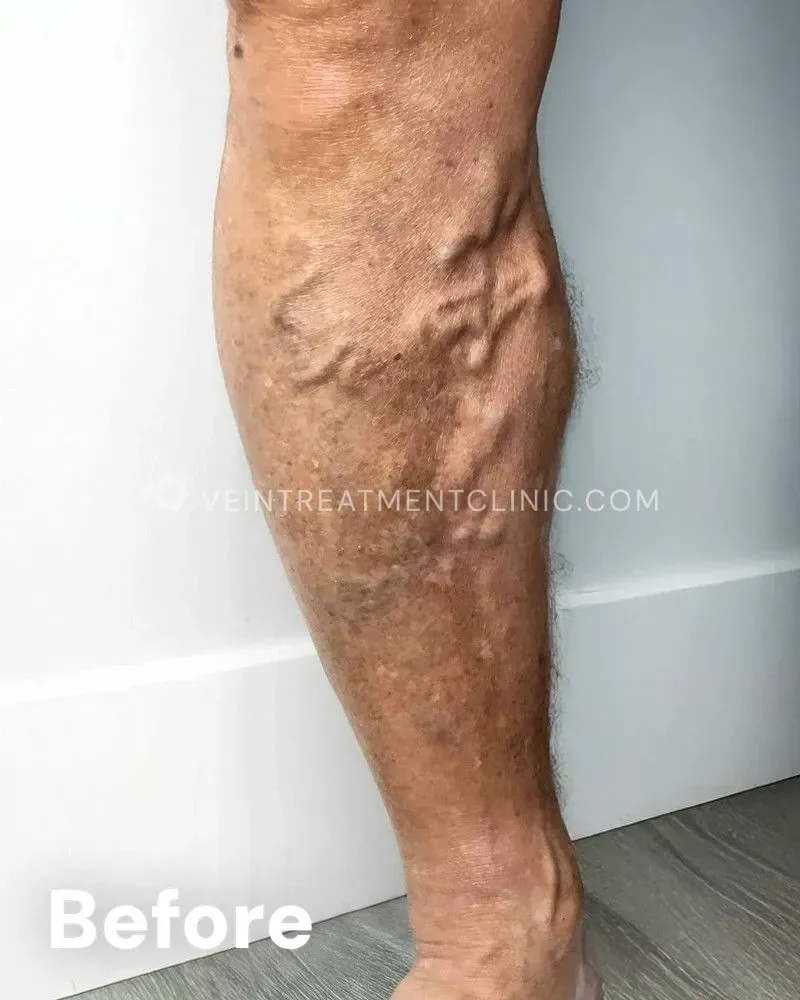
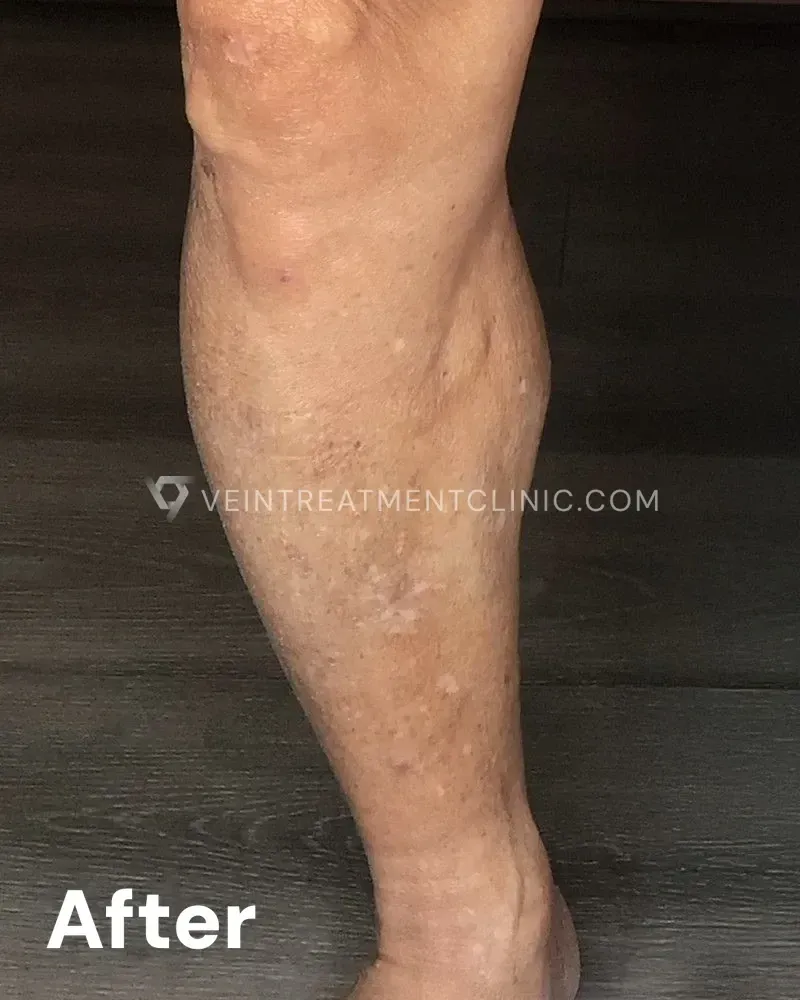
Male, treated for varicose veins on the calves and thighs with VeinVanish™, a customized treatment plan tailored to his condition. The after photo shows the legs appearing smoother-looking with the varicose veins visibly reduced.
What results can patients expect?
Spider veins typically begin to fade within several weeks after treatment.
Full results may take a few months, and some veins may require additional treatment.
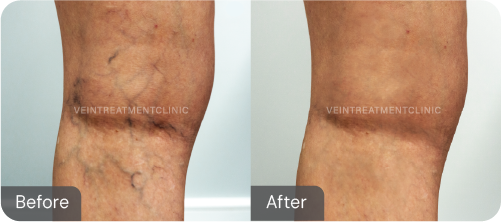
Spider Vein before and after treatment pictures.
Results may vary according to each case.
Spider Vein before and after treatment pictures.
Results may vary according to each case.
Are there side effects or risks of sclerotherapy?
Common side effects include mild bruising, redness, or tenderness at injection sites.
Serious complications are uncommon when sclerotherapy is performed by experienced specialists.
Is sclerotherapy safe?
Yes, for most patients when performed by experienced specialists on appropriate veins.
Do spider veins come back after sclerotherapy?
Treated veins usually do not return.
However, new spider veins can form over time, especially if underlying vein pressure is present.
When is a vein evaluation recommended before sclerotherapy?
A vein evaluation is recommended when spider veins are associated with pain, swelling, or repeated recurrence.
Ultrasound helps determine whether deeper vein reflux should be treated first.
Get a Peek Inside Your Veins—Book Your Ultrasound Evaluation.