

Table of contents
Learn What Conditions Are Treated With Vein Treatment
What Conditions Are Treated With Vein Treatment?

Medically verified
Last updated on 1/29/2026

By Dr. Michael Nguyen
Vein Doctor at Vein Treatment Clinic
Harvard Medical School
Board Certified by the American Board of Venous and Lymphatic Medicine
Vein treatment is used to address conditions where veins are not functioning properly, most often in the legs.
Many patients are unsure whether their symptoms or visible veins fall under something a vein specialist treats.

This page explains the most common conditions treated with vein treatment and how these conditions are connected.
If you’re unsure whether your condition may be treated with vein care, a vein evaluation can help clarify next steps.
Varicose veins
Varicose veins are enlarged, bulging veins that commonly appear in the legs and are one of the most frequently treated vein conditions.
Treatment focuses on correcting faulty blood flow and relieving symptoms such as pain, swelling, and heaviness.
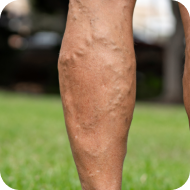
Varicose Veins
Varicose Veins
Spider veins
Spider veins are small, visible surface veins that often appear red, blue, or purple.
They are usually cosmetic but can sometimes cause itching, burning, or mild discomfort.
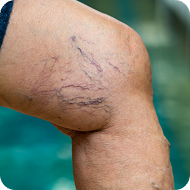
Spider Veins
Spider Veins
Chronic venous insufficiency
Chronic venous insufficiency occurs when veins are unable to move blood efficiently back toward the heart.
It is a progressive condition that can lead to swelling, skin changes, and ulcers if untreated.
Venous reflux (valve failure)
Venous reflux refers to backward blood flow caused by failing vein valves.
This underlying issue often drives varicose veins, spider veins, and chronic venous insufficiency.
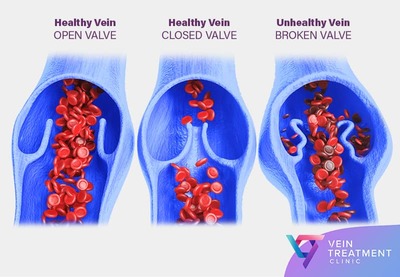
Vein valves
Vein valves
Leg swelling related to vein disease
Vein disease is a common cause of chronic leg or ankle swelling that worsens during the day.
Treatment helps reduce pressure in the veins and improve fluid movement.
Skin changes caused by vein disease
Vein treatment may address skin discoloration, thickening, itching, or irritation near the ankles.
These changes are signs of prolonged vein pressure and require evaluation.
Venous ulcers and slow-healing wounds
In advanced cases, vein disease can lead to open sores or ulcers near the ankles.
Vein treatment helps improve circulation and supports wound healing.
Recurrent or persistent vein symptoms
Vein treatment may be appropriate when symptoms such as pain, heaviness, fatigue, or swelling persist despite conservative measures.
Treating the underlying vein problem can provide lasting symptom relief.
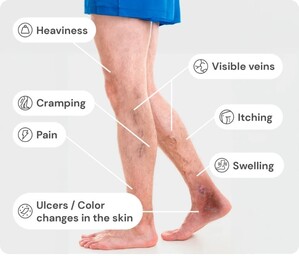
Vein disease symptoms
Vein disease symptoms
How specialists determine which conditions to treat?
A vein evaluation, often including ultrasound, identifies which veins are malfunctioning.
This ensures treatment is directed at the underlying cause rather than surface symptoms alone.