

Table of contents

Get treated by vein treatment industry leaders
What Are Common Symptoms of Chronic Venous Insufficiency?

Medically verified
Last updated on 1/29/2026

By Dr. Michael Nguyen
Vein Doctor at Vein Treatment Clinic
Harvard Medical School
Board Certified by the American Board of Venous and Lymphatic Medicine
Chronic venous insufficiency symptoms often develop gradually and may worsen over time. They are caused by poor blood flow and increased pressure inside the leg veins.
Many patients live with symptoms of venous insufficiency for years without realizing they are related to poor circulation in the leg veins.

Understanding the signs of chronic venous insufficiency helps patients recognize when leg swelling, skin changes, or persistent discomfort may be linked to venous reflux disease.
If you’re experiencing ongoing leg symptoms and aren’t sure why, a vein evaluation can help determine whether chronic venous insufficiency is the cause.
Leg swelling (especially ankles and lower legs)
Leg swelling, especially around the ankles and lower legs, is one of the most common chronic venous insufficiency symptoms. Leg swelling related to venous insufficiency typically worsens later in the day and improves with elevation or overnight rest.
This swelling reflects increased vein pressure and poor circulation in the lower legs.
Legs Feeling Heavy or Tired? Check Your Symptoms for Vein Disease
Heaviness or fatigue in the legs
Many patients describe heaviness or fatigue in the legs as an early symptom of venous insufficiency. This sensation often worsens after prolonged standing or sitting and improves with movement.
It reflects impaired venous return and rising pressure inside the leg veins.
Aching, throbbing, or leg pain
Aching or throbbing discomfort in the legs is common, especially after prolonged standing or sitting.
Pain often improves with movement or elevation, which is characteristic of venous-related symptoms.
Symptom Checker
Restless legs or nighttime discomfort
Some patients experience restless legs, cramping, or discomfort at night.
These symptoms are frequently mistaken for muscle or nerve issues but can be related to venous insufficiency.
Skin itching or irritation
Itching around the ankles or lower legs can be an early sign of skin changes from venous insufficiency. Ongoing vein pressure triggers inflammation in the surrounding tissue, leading to irritation before visible discoloration develops.
Skin discoloration near the ankles
Darkening or brownish discoloration of the skin near the ankles is a sign of long-standing venous insufficiency.
This occurs when blood components leak into surrounding tissue over time.
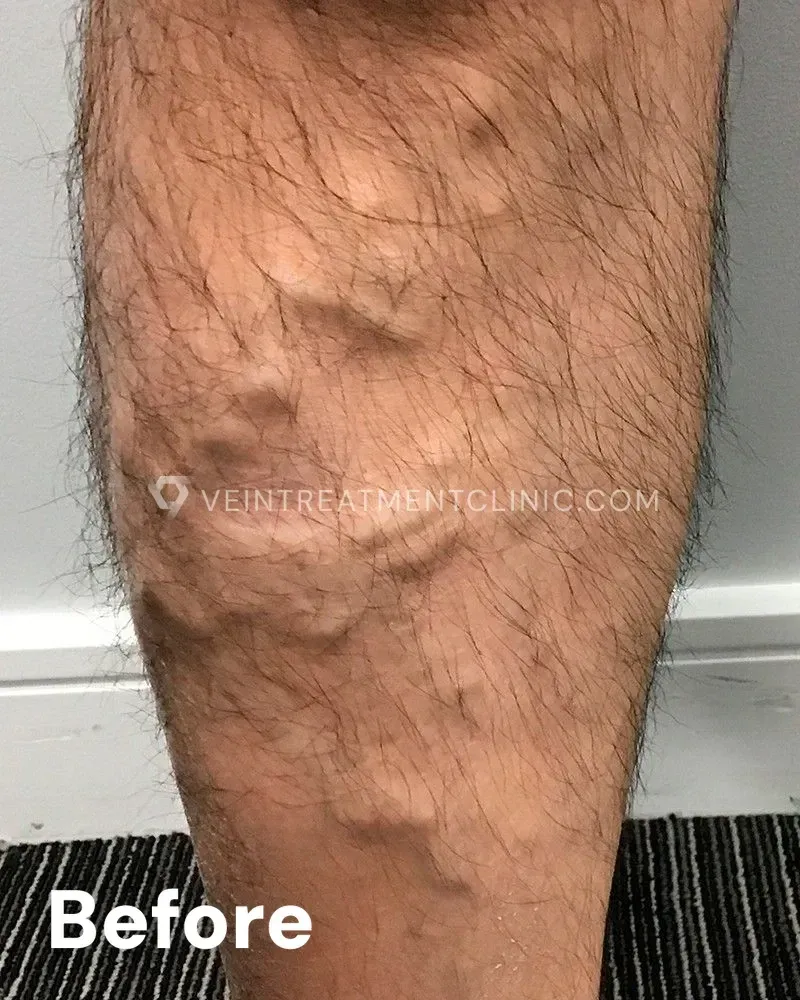
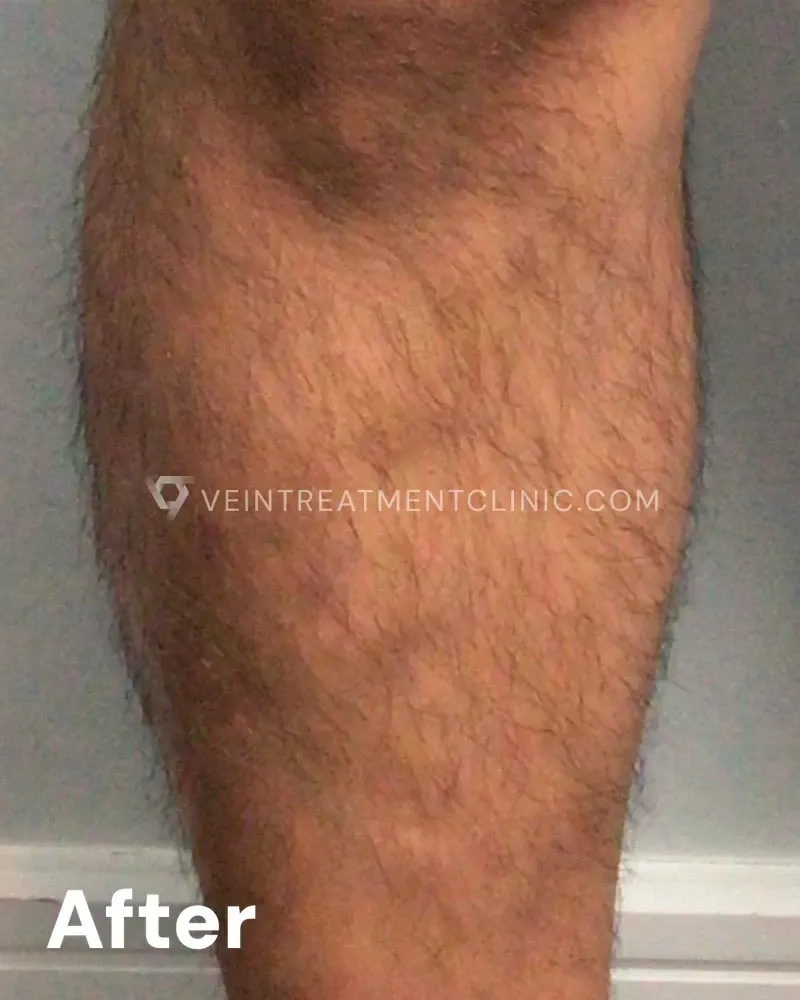
Male, treated for varicose veins on the calves with VeinVanish™, a customized treatment plan tailored to his condition. The after photo shows the treated areas appearing smoother with the varicose veins visibly reduced.
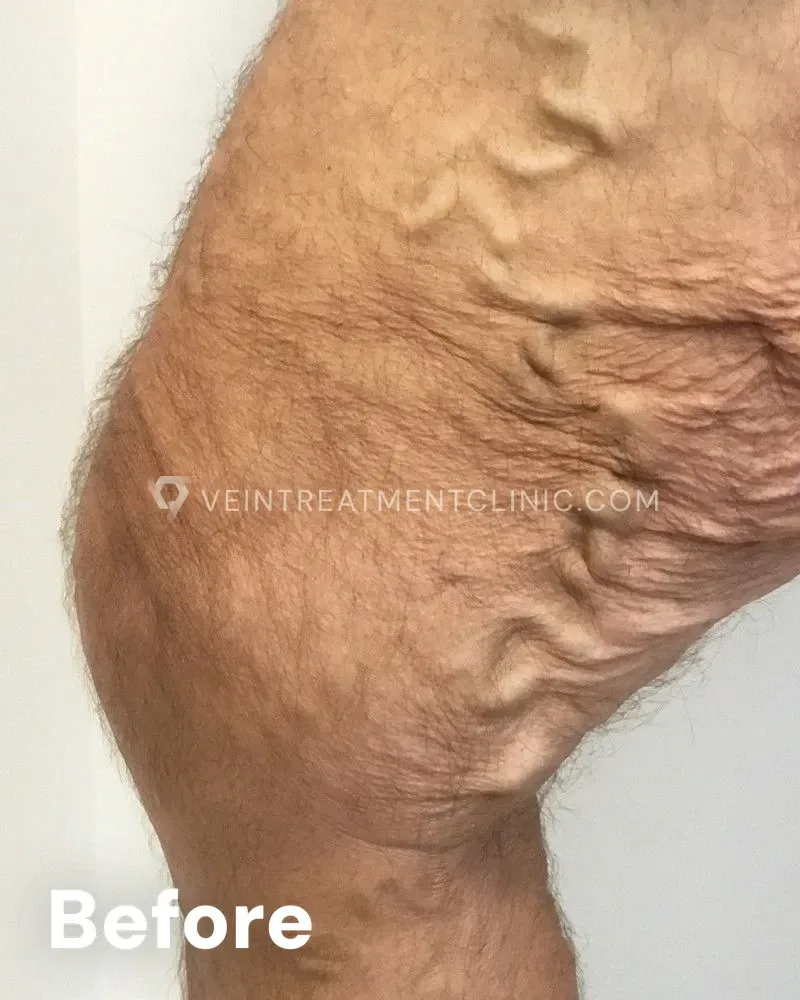
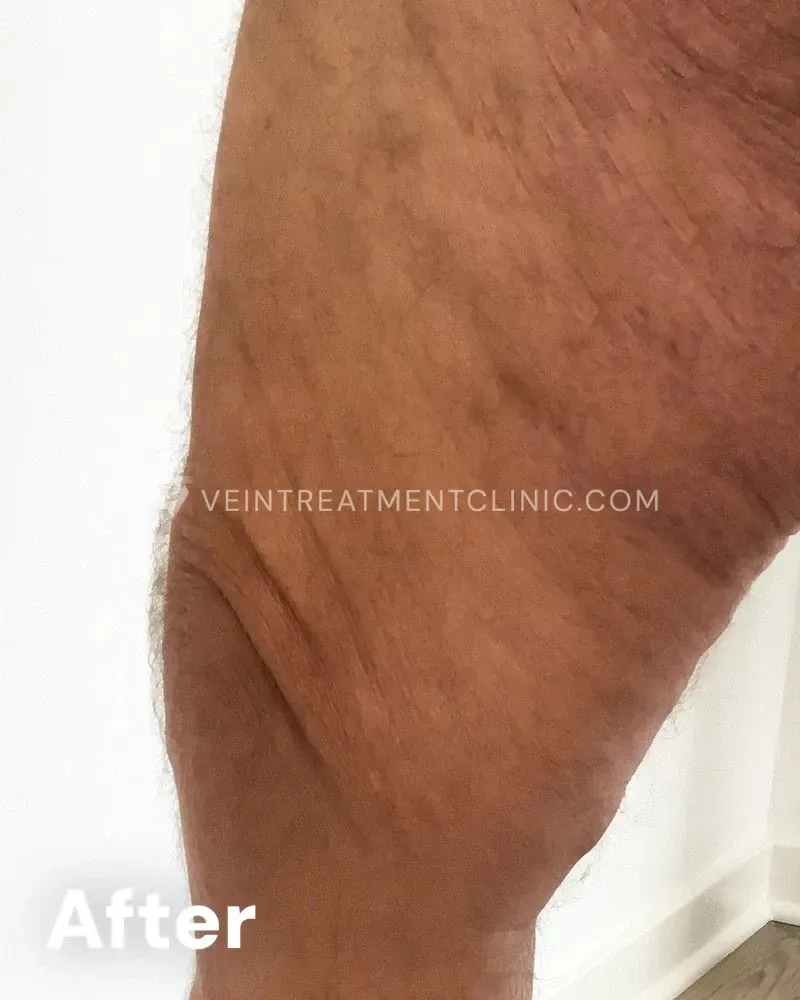
Male, treated for varicose veins on the thighs and knees with VeinVanish™, a customized treatment plan tailored to his condition. The after photo shows the thighs and knees with a smoother-looking appearance.
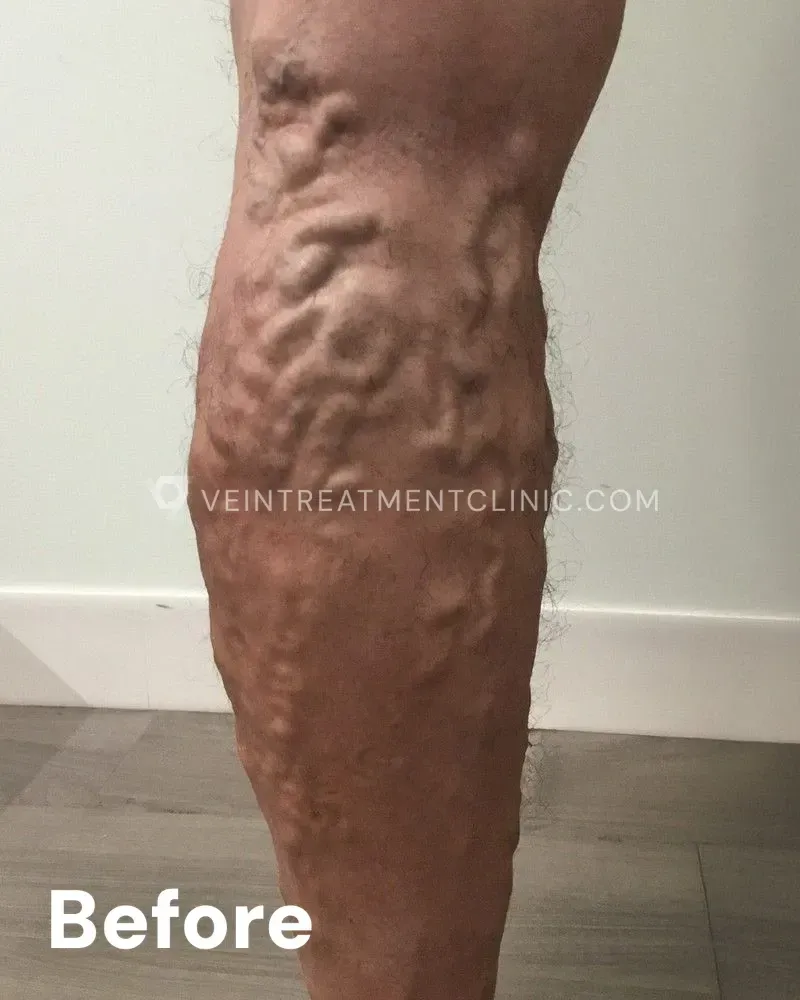
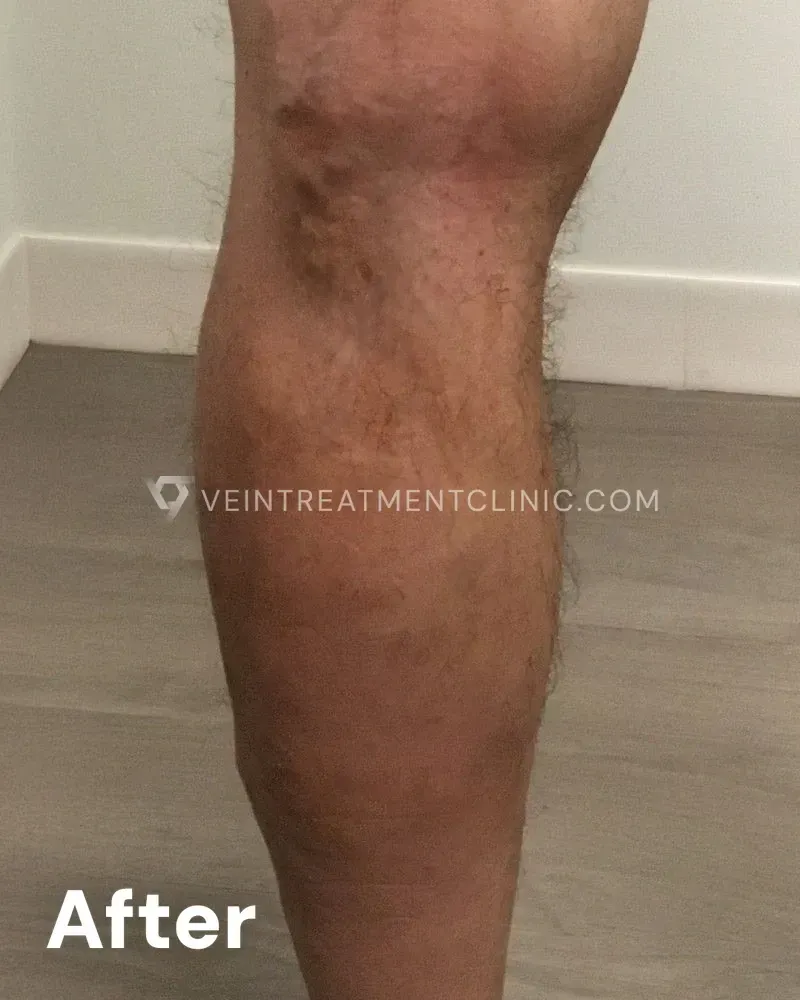
Male, treated for varicose veins on the calves and knees with VeinVanish™, a customized treatment plan tailored to his condition. The after photo shows the affected areas appearing smoother-looking with the varicose veins visibly reduced.
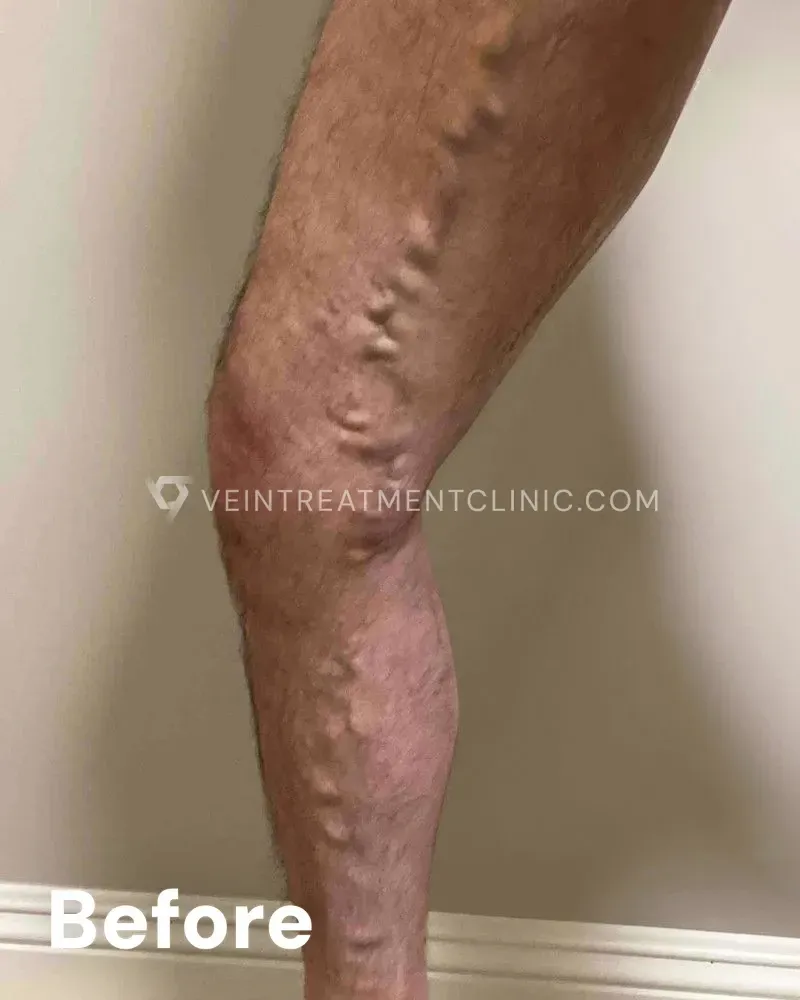
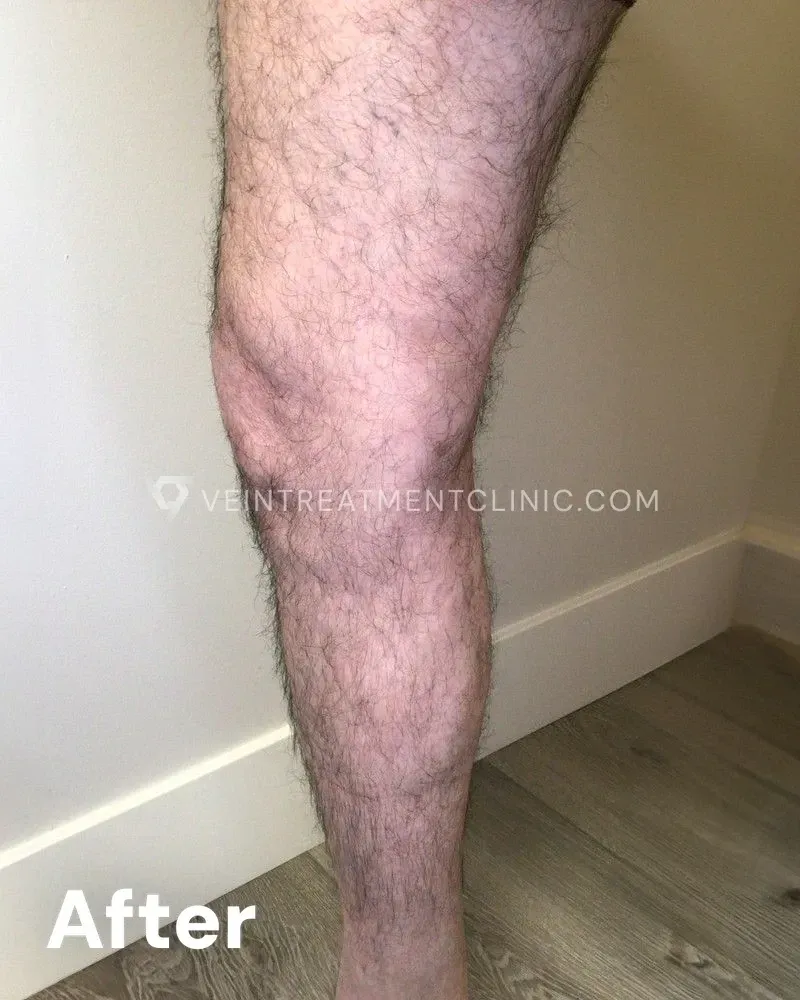
Male, treated for varicose veins on the thighs, calves, and knees with VeinVanish™, a customized treatment plan tailored to his condition. The after photo shows smoother-looking legs with the varicose veins visibly reduced across the treated areas.
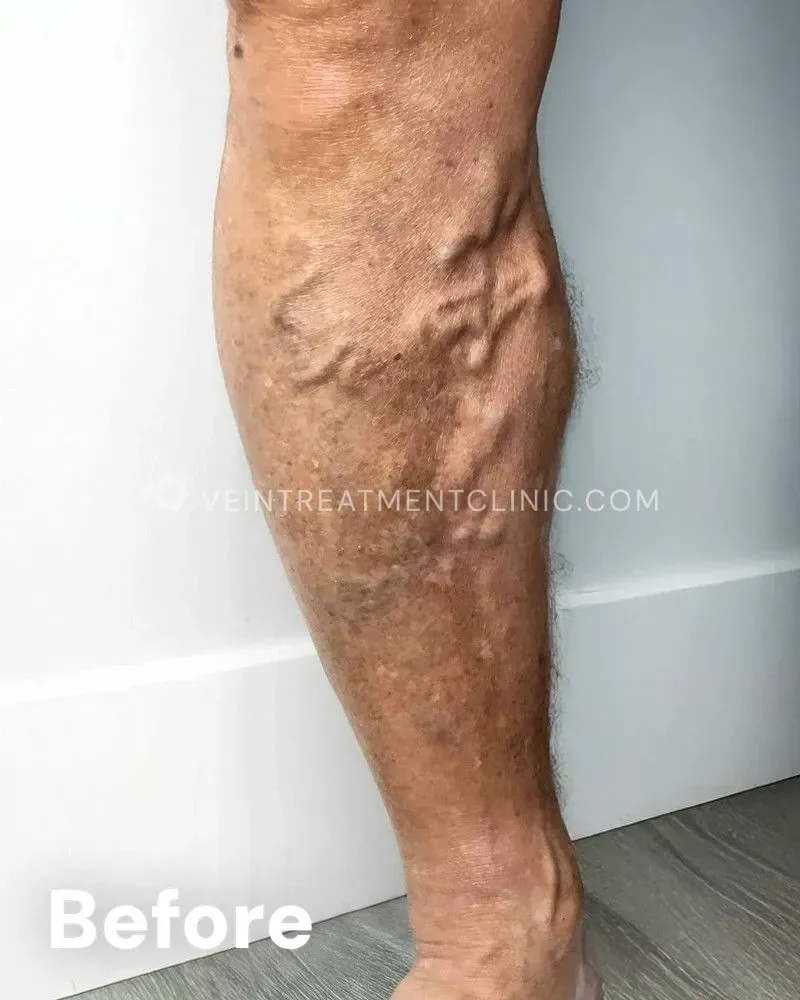
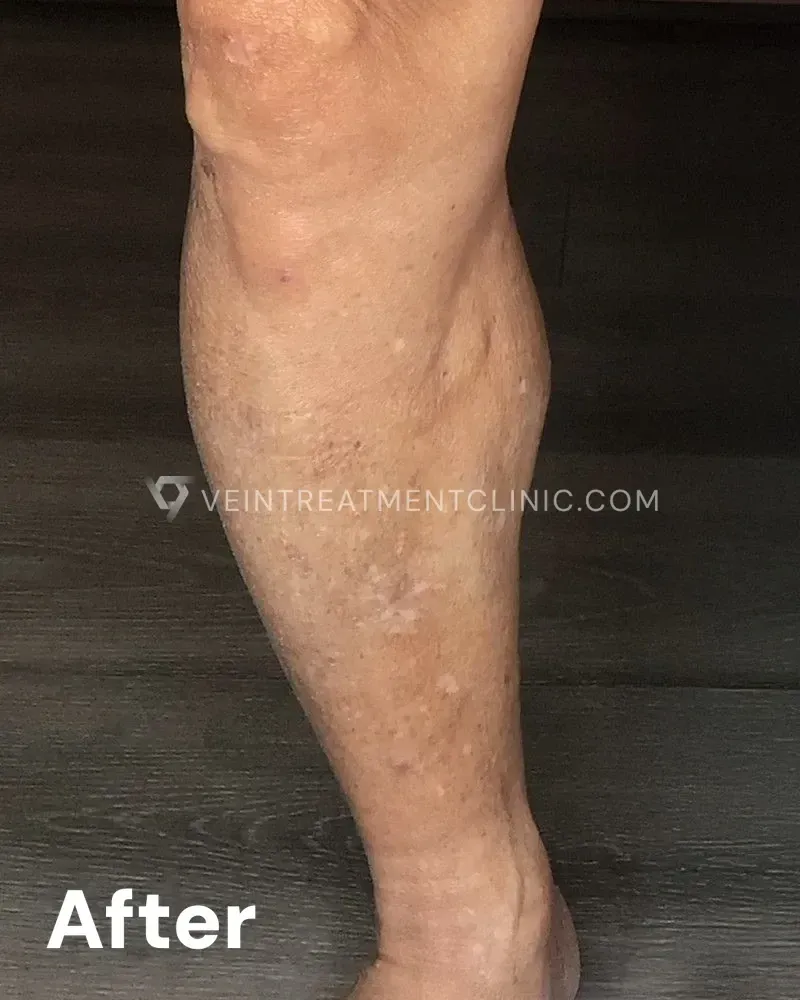
Male, treated for varicose veins on the calves and thighs with VeinVanish™, a customized treatment plan tailored to his condition. The after photo shows the legs appearing smoother-looking with the varicose veins visibly reduced.
Skin thickening or texture changes
The skin may become thick, tight, or leathery in advanced stages of chronic venous insufficiency.
These changes indicate ongoing inflammation and impaired circulation.
Visible varicose veins
Varicose veins are often an outward sign of chronic venous insufficiency.
Not all patients with CVI have visible varicose veins, but many do.
Open sores or venous ulcers
In advanced cases, chronic venous insufficiency can lead to open sores or ulcers near the ankles.
These wounds may heal slowly without treating the underlying vein problem.
Wounds That Won't Heal? Discover the Link Between Circulation and Skin Ulcers
Do symptoms always appear together?
No. Some patients have only mild symptoms at first, while others experience multiple symptoms simultaneously.
Symptoms often progress gradually, which is why early evaluation is important.
When symptoms suggest progression?
Worsening swelling, skin changes, or pain suggest progression of chronic venous insufficiency.
Early treatment can help slow progression and prevent complications.